
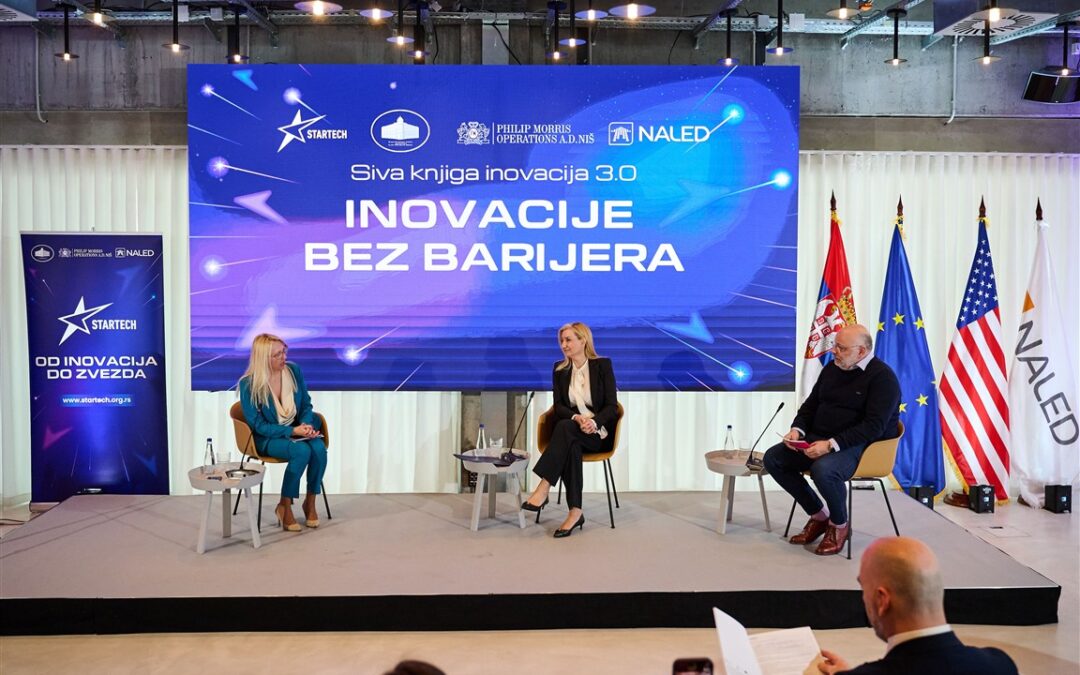
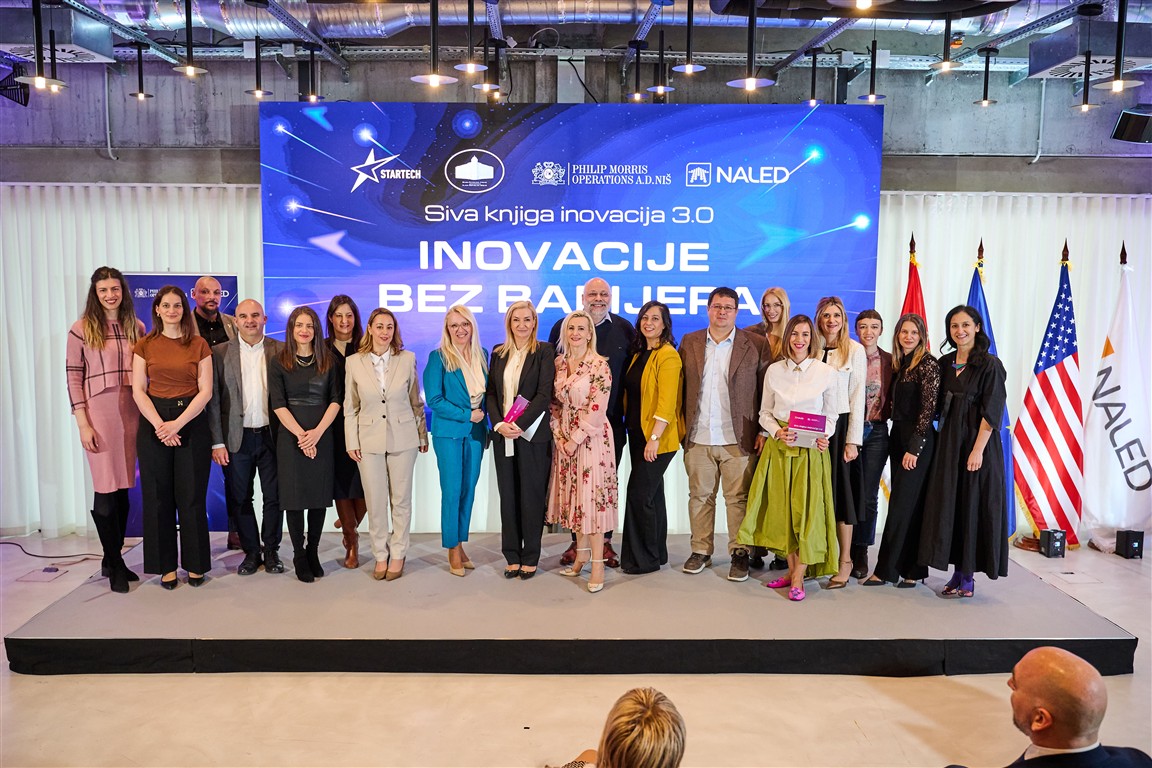
The third edition of the Grey Book of Innovation was presented today at Ložionica, organized by NALED and StarTech.
The panel dedicated to digitalization of healthcare and the use of data, with a particular focus on the challenges and opportunities brought by the rapid development of technology in medicine, featured Vukašin Radulović, President of the NALED Healthcare Alliance, and Ivana Stašević Karličić from the Ministry of Health. The discussion was moderated by Jelena Bojović, Director of the Centre for the Fourth Industrial Revolution.
The discussion opened the question of Serbia’s position on the global map of healthcare innovation at a time when digitalization and biotechnology are becoming standard elements of modern medicine. It was emphasized that Serbia had made significant progress in recent years through the introduction of e-Prescription, the digitalization of health records, e-Laboratory, and e-Sick Leave services. However, a key challenge remained the more efficient use of data and the further development of personalized medicine.
Radulović highlighted that healthcare innovation did not only involve the introduction of new technologies, but also a transformation in the way data was collected, exchanged, and used to improve the quality of healthcare services.
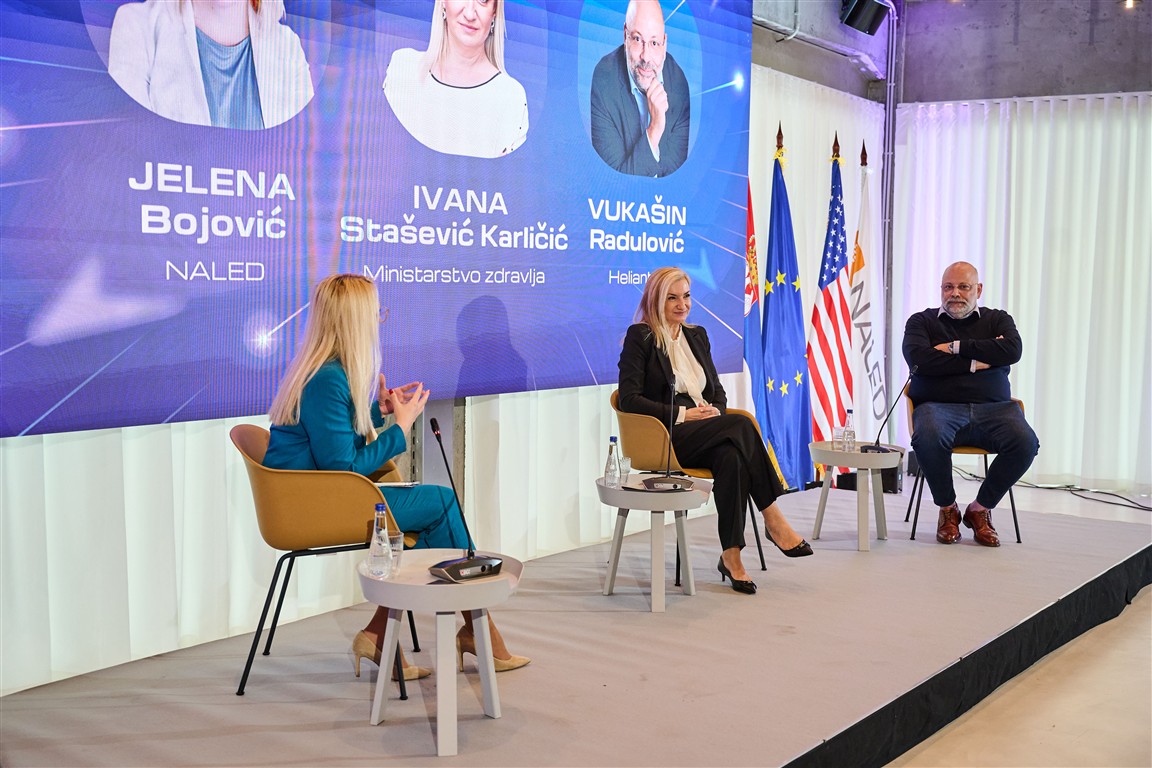
A special part of the discussion focused on telemedicine, which was already being implemented in Serbia through pilot projects. Participants agreed that telemedicine had significant potential to improve access to healthcare services, especially in rural areas, but that wider adoption required further improvement of the regulatory and organizational framework.
The panellists also emphasized that data represented one of the most valuable resources in modern healthcare. Global analyses indicated that the use of Big Data in healthcare could reduce treatment costs by 12% to 20%, while artificial intelligence trained on high-quality data could identify early signs of disease years before traditional methods. To fully realize this potential, advanced infrastructure and clear data governance rules were essential.
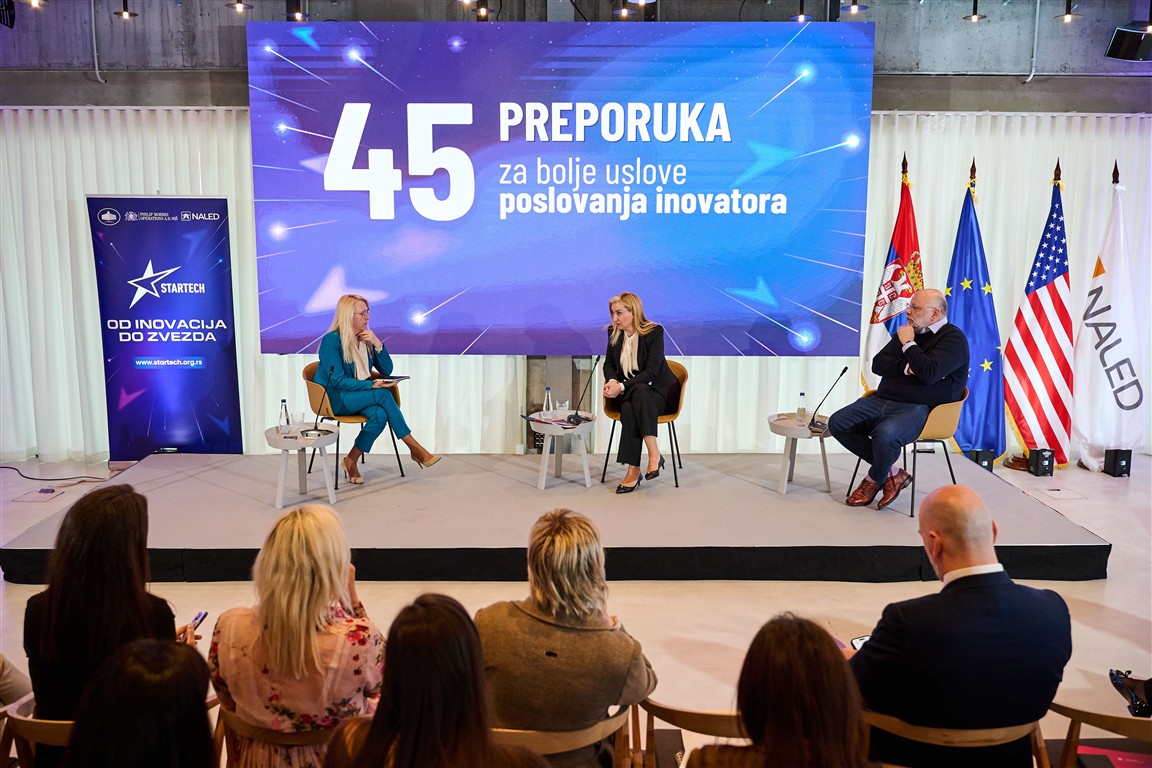

The previous edition of the Grey Book of Innovation contained 45 recommendations aimed at improving the business environment for innovative and high-tech companies, covering key areas such as cooperation between science and industry, financing, the tax system, infrastructure, and—of particular importance—the use of data. Other important topics included artificial intelligence regulation, facilitating research and development, and improving data management.
The new, third edition builds upon these recommendations and further develops them, with the goal of accelerating the growth of Serbia’s start-up ecosystem and technology sector. The announcement of new guidelines for improving the innovation environment and removing administrative barriers further confirms this direction.
The panel concluded that Serbia had a strong foundation for further development of digital healthcare, but that achieving the full potential of innovation required continued improvement of regulations, strengthening of infrastructure, and encouraging cooperation between the public and private sectors.
*Photos taken from the website: naled.rs