
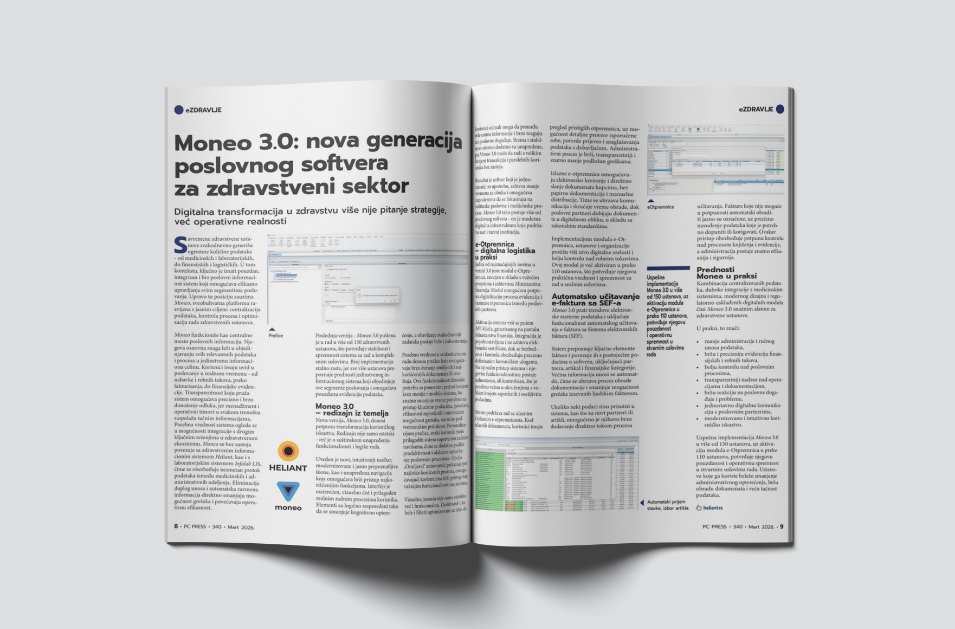
In the special edition of PC Press on the subject of eHealth, a text was published about business software Moneo 3.0 – a modern solution intended for improving business processes in the health sector and the economy. Below we present the text in its entirety.
Digital transformation in healthcare is no longer a matter of strategy—it has become an operational reality. Modern healthcare facilities generate vast amounts of data every day, ranging from medical and laboratory information to financial and logistical data. In this context, having a reliable, integrated, and efficient business information system is essential for managing all aspects of operations effectively. This is precisely the role of Moneo, a comprehensive platform developed with a clear goal: centralizing data, controlling processes, and optimizing the operations of healthcare facilities.
Moneo serves as a central hub for business information. Its key strength lies in bringing together all relevant data and processes into a single, unified information environment. Users have real-time insight into business operations—from procurement and inventory management to invoicing and financial records. The transparency provided by the system enables faster and more accurate decision-making, as management and operational teams have access to reliable information at all times.
A particular value of the system lies in its ability to integrate with other key solutions within the healthcare ecosystem. Moneo seamlessly connects with the Heliant Healthcare Information System as well as the Infolab LIS laboratory information system, ensuring uninterrupted data exchange between medical and administrative departments. Eliminating duplicate data entry and enabling automatic information exchange directly reduces the risk of errors and improves operational efficiency.
The latest version—Moneo 3.0—has been implemented in more than 150 healthcare facilities, confirming the system’s stability and readiness to operate in complex environments. The number of implementations continues to grow as more healthcare facilities recognize the benefits of a unified information system that integrates all business segments and enables reliable data management.
Moneo 3.0 – A Complete Redesign from the Ground Up
The new version, Moneo 3.0, brings a complete transformation of the user experience. The redesign is not merely visual—it represents a fundamental improvement in functionality and workflow logic.
The system now features a new, intuitive toolbar, modernized and easily recognizable icons, as well as improved navigation that enables faster access to frequently used functions. The interface is cleaner, more streamlined, and adapted to users’ real working processes. Elements are logically organized to reduce cognitive load, making everyday tasks faster and simpler.
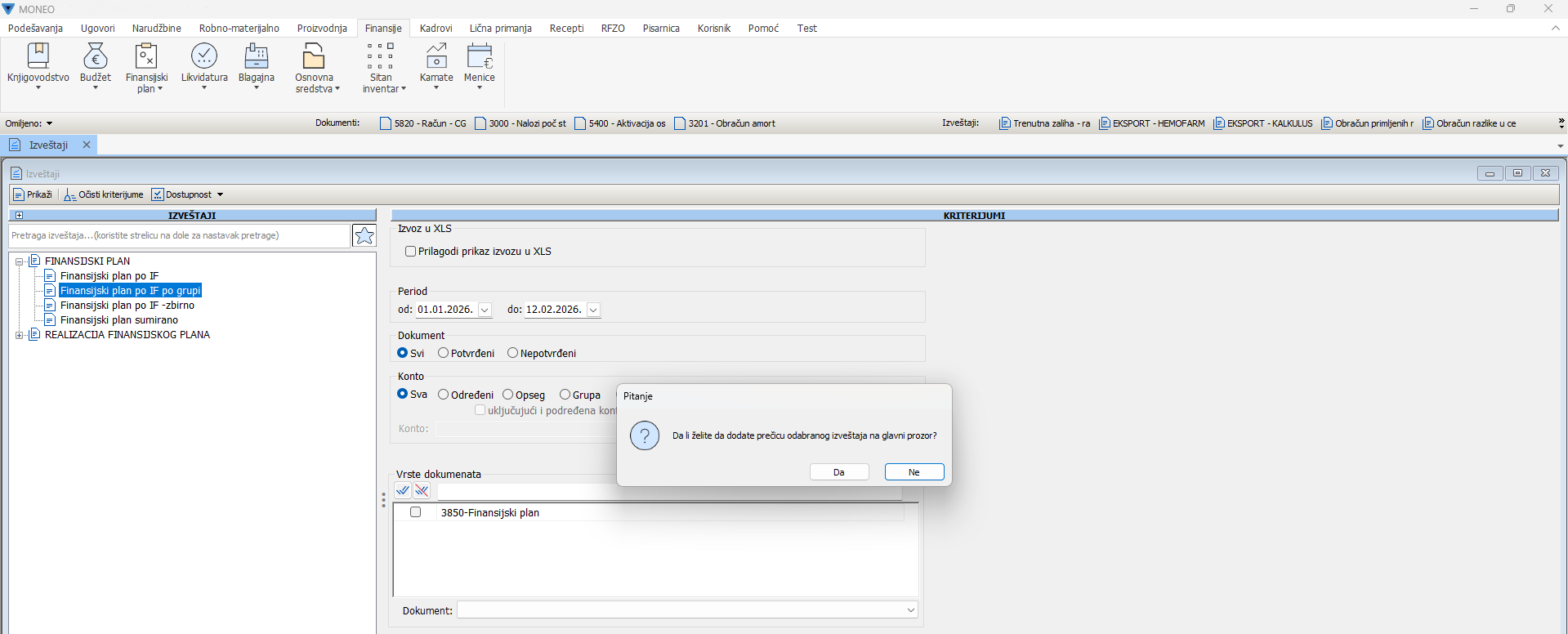
Shortcuts
A particularly valuable improvement for daily operations is the introduction of shortcuts that allow users to quickly save and access their favourite and most frequently used documents or reports. This functionality eliminates the need to repeatedly search through menus and system modules, significantly reducing the time required to access key information, increasing employee efficiency, and minimizing the possibility of errors—especially in time-sensitive situations. Through shortcut personalization, each user can adapt the system to their own workflow and working habits, further improving productivity and simplifying business process management.
The “Favourites” option automatically displays the five most frequently used windows, providing users with faster access to the system’s most important functionalities.
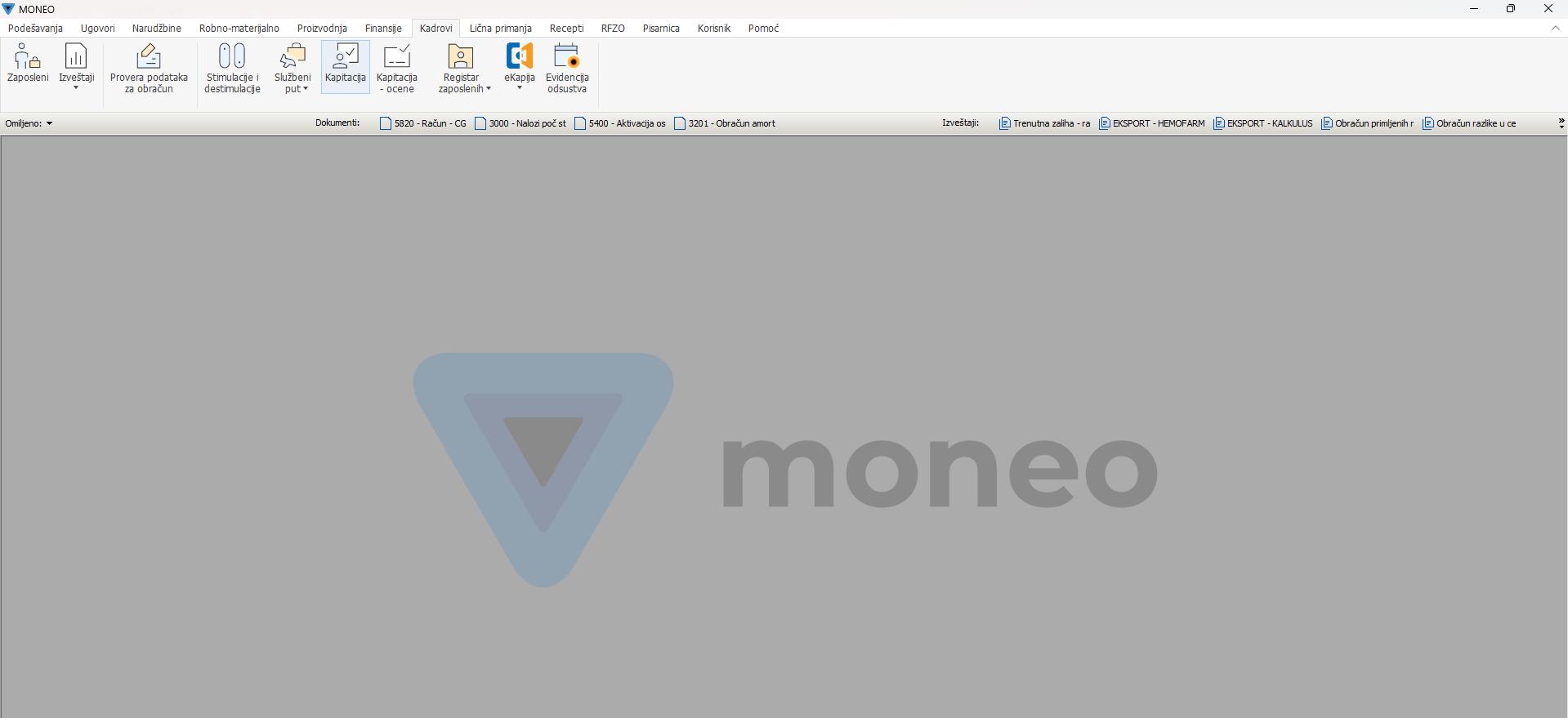
Visual clarity is not only an aesthetic feature—it is also a functional advantage. Dashboards, tables, and filters have been optimized so that users can quickly find relevant information and respond promptly to business events. System speed and stability have also been further improved, allowing Moneo 3.0 to handle large numbers of transactions and concurrent users without interruptions.
The result is software that is easier to use, requires less time for training, and enables employees to focus on essential business and healthcare processes. Moneo 3.0 is therefore more than just business software—it is a modern digital infrastructure that supports the growth and development of healthcare institutions.
e-Delivery Note – Digital Logistics in Practice
One of the most significant new features introduced in version 3.0 is the e-Delivery Note module, developed in accordance with current regulations and the requirements of the Ministry of Finance. The module enables the complete digitalization of the process of recording and exchanging delivery notes between business partners.
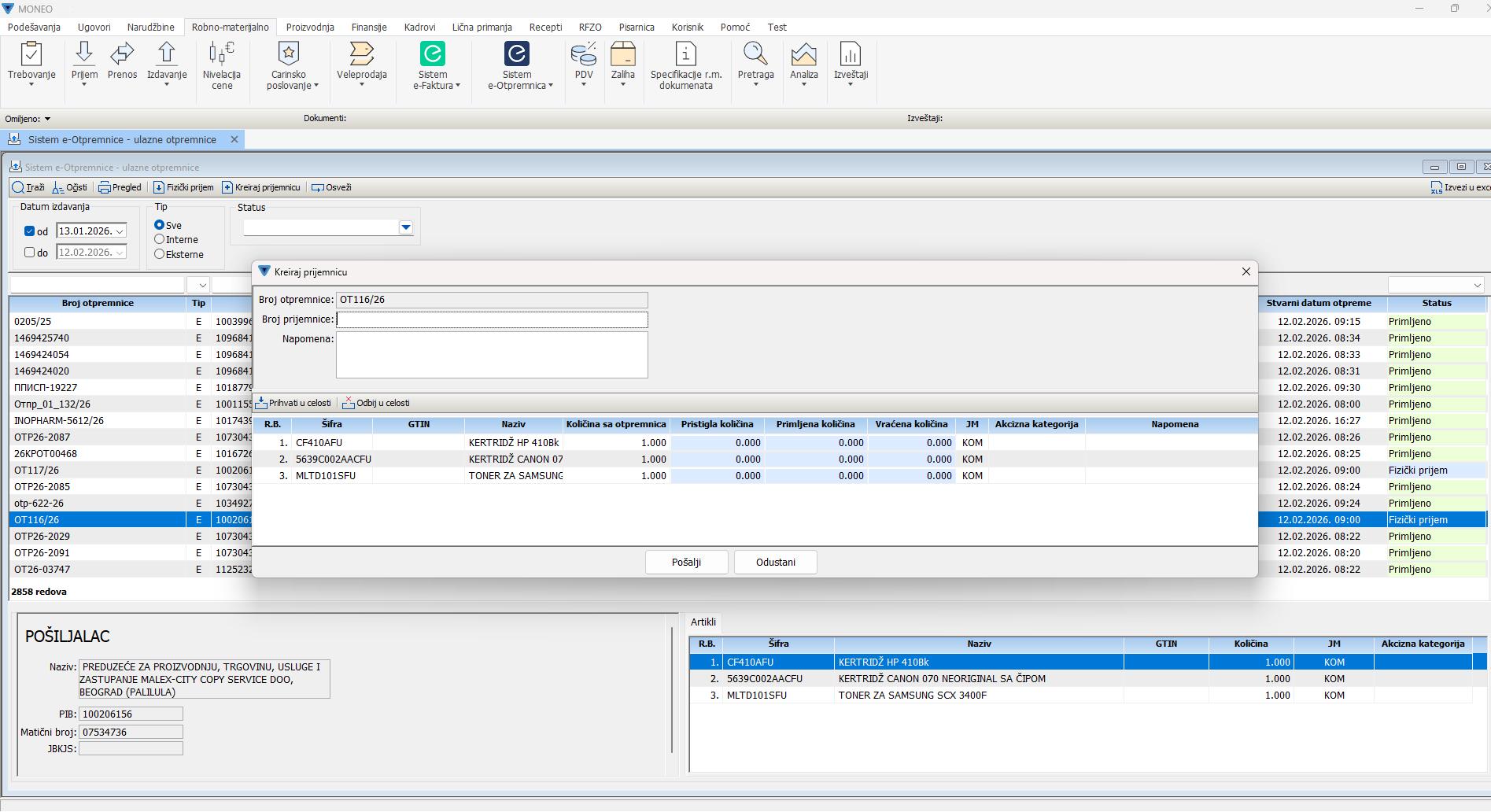
e-Delivery Note
The system is activated through an API key generated on the Ministry of Finance portal. Integration has been simplified and does not require electronic certificates, while security and access control are ensured through precisely defined user roles. In this way, access to the system and its functionalities is simple yet controlled, which is particularly important in environments with a large number of employees and sensitive data.
The system supports both incoming and outgoing e-delivery notes. For incoming documents, users have an overview of received delivery notes, with the ability to verify delivered goods in detail, confirm receipt, and reconcile data with suppliers. The administrative process becomes faster, more transparent, and significantly less prone to errors.
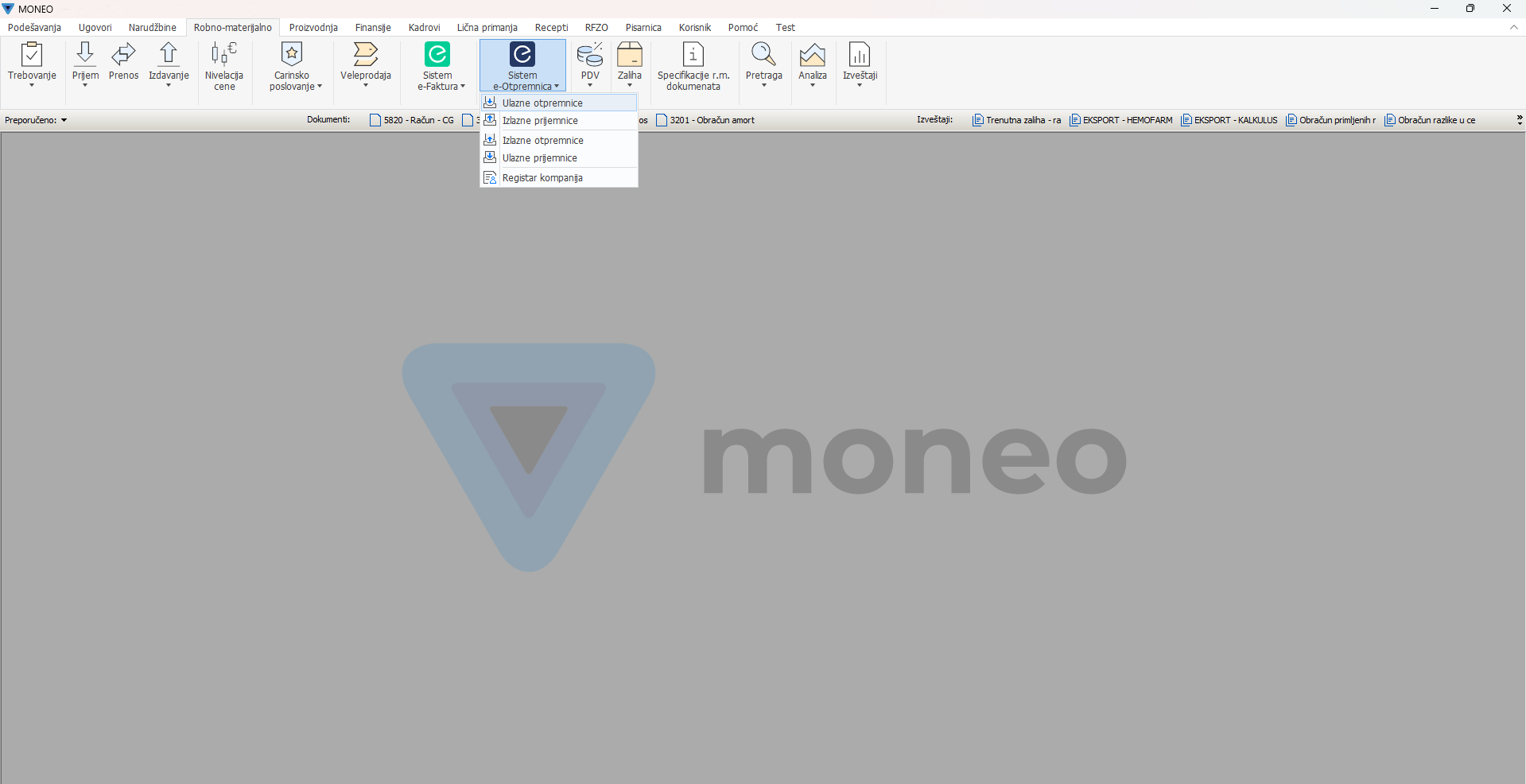
Outgoing e-Delivery Notes enable the electronic creation and direct sending of documents to customers, eliminating the need for paper documentation and manual distribution. This accelerates communication and reduces processing time, while business partners receive documents in digital format that complies with legal standards.
By implementing the e-Delivery Note module, healthcare facilities and organizations achieve a higher level of digital maturity and improved control over inventory and logistics processes. The module has already been activated in more than 110 healthcare facilities, confirming its practical value and readiness for use in real-world environments.
Automatic Import of e-Invoices from SEF
Moneo 3.0 follows the latest trends in electronic data exchange and includes functionality for the automatic import of e-invoices from the Electronic Invoicing System (SEF).
The system recognizes key invoice elements and links them with existing data within the software, including business partners, items, and financial categories. Most information is entered automatically, accelerating document processing and reducing the possibility of errors caused by manual data entry.
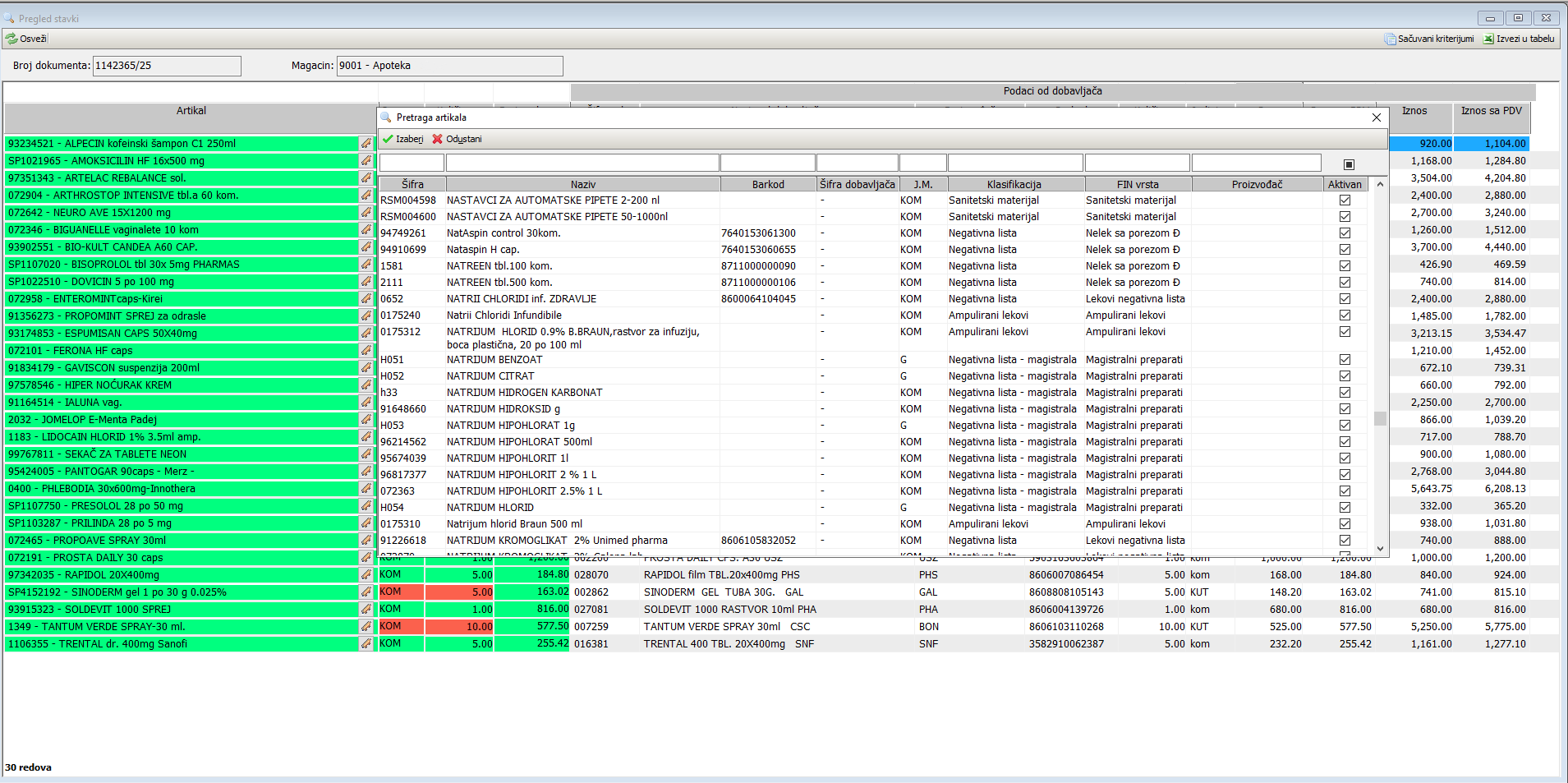
Automatic import of e-Invoices, choosing articles
If certain data is not already available in the system, such as new business partners or items, users can quickly add it directly during the import process. Invoices that cannot be fully processed automatically are clearly marked, with precise indications of the information that needs to be completed or corrected. This approach ensures full control over the posting and record-keeping process, while making administration significantly more efficient and secure.
Moneo Benefits in Practice
The combination of centralized data, deep integration with healthcare information systems, modern design, and regulatory-compliant digital modules makes Moneo 3.0 a powerful tool for healthcare facilities.
In practice, this means:
- less administration and manual data entry
- faster and more accurate recording of financial and inventory flows
- improved control over business processes
- more transparent monitoring of operations and documentation
- faster response to business events and challenges
- simple digital communication with business partners
- a modernized and intuitive user experience
The successful implementation of Moneo 3.0 in more than 150 healthcare facilities, along with the activation of the e-Delivery Note module in over 110 facilities, confirms its reliability and operational readiness in real working environments. Healthcare facilities using the system report reduced administrative workload, faster document processing, and improved data accuracy.
The text was originally published on the website: PC Press